A Complete Guide to Spotting Hail Damage
Hail damage to a roof can be subtle and easy to miss, so knowing how to spot it helps a Batesville homeowner catch it before it leads to bigger problems. This guide covers the signs on shingles and metal components, granule loss in the gutters, indirect signs around the property, how to inspect safely, why it is hard to spot, and the value of a professional inspection and documentation. The recurring theme is that you can spot signs from the ground, but because hail damage is hard to confirm from below, a professional inspection is the reliable way to verify and assess it, which is also relevant for any insurance claim.
Signs at a Glance
The table below summarizes where to look and what to look for. Treat it as a quick reference, since hail damage is often subtle and best confirmed by a professional. The recurring theme is that signs on shingles, metals, and gutters, plus indirect clues, indicate possible hail damage, with a professional inspection verifying it for your home.
| Where to Look | What to Look For |
|---|---|
| Shingles | Dark spots, missing granules, exposed asphalt |
| Gutters | Collected granules at downspout outlets |
| Metal surfaces | Dents on gutters, downspouts, vents, flashing |
| Around the property | Dented AC fins, dings on deck or siding |
| Confirmation | Professional inspection |
Professional Inspection
A professional roof inspection is the reliable way to confirm hail damage, since it is hard to assess accurately from the ground. A qualified roofer can inspect the roof closely and safely, accurately identify hail damage, distinguish it from normal wear, and assess its extent. For a Batesville homeowner, a professional inspection is worthwhile after a significant hail storm, when you spot signs, or when indirect clues suggest the roof was hit. Understanding its value helps you confirm the situation accurately. Rather than relying on an uncertain look from the ground, a professional inspection provides an accurate determination of whether and how much the roof was damaged, which is valuable for deciding on repairs and for any insurance claim. Batesville Roofing provides roof inspections for Batesville homeowners, so if you suspect hail damage, a professional inspection is the dependable way to confirm and assess it for your home.
Why It Is Hard to Spot
Hail damage is hard to spot, particularly from the ground, which is why it often goes unnoticed. The bruising and granule loss on shingles can be subtle, hard to see from below, and sometimes only apparent on close inspection, while the damage may not cause immediate, obvious leaks. For a Batesville homeowner, this means hail damage can be present even when not easy to see. Understanding why it is hard to spot helps you take it seriously. Because hail damage is often subtle and hard to assess accurately from the ground, a quick look from below can miss it, so the absence of obvious signs does not always mean the roof is fine, and after a significant hail storm, especially with indirect signs of severity, a professional inspection is the reliable way to determine whether the roof was damaged, since the pros can assess it closely for your home.
Signs on Shingles
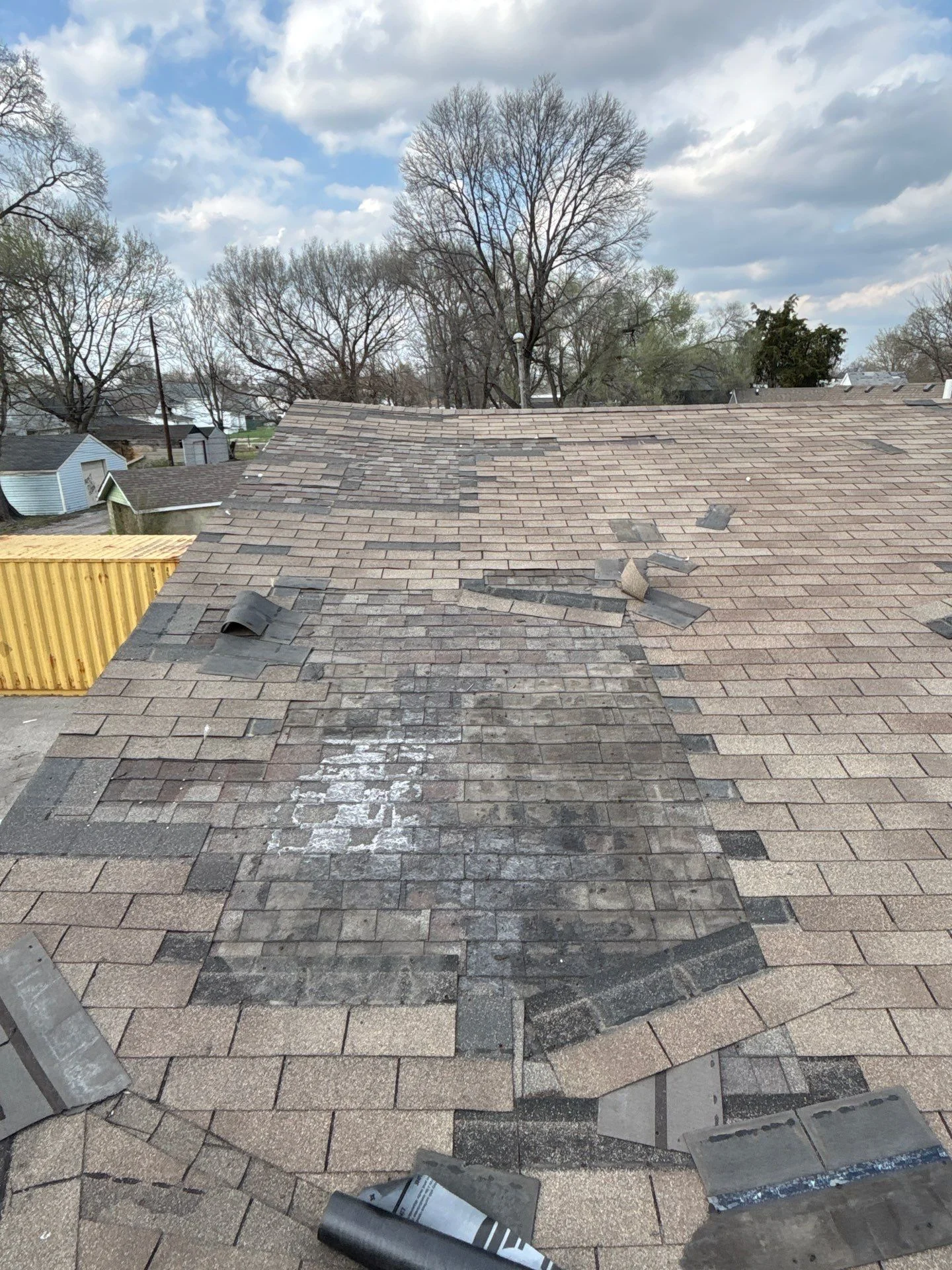
On asphalt shingles, hail damage shows as dark spots or bruises where granules have been knocked off, exposing the asphalt, often randomly distributed since hail falls randomly, along with granule loss, dents, or a pockmarked look. For a Batesville homeowner, these shingle signs are the most direct indicators, though they can be hard to see from the ground. Understanding the shingle signs helps you know what to look for. The random dark spots with missing granules are the classic hail indicator, distinguishing the damage from wear, so looking for this pattern, ideally with binoculars from the ground, helps you spot it. Because the signs can be subtle and hard to assess from below, a professional inspection up close confirms the damage, so the shingle signs are the key thing to look for, with a professional verifying them where the roof can be assessed safely for your home.
Next Steps and Summary
If you spot signs of hail damage, the next steps are to document them, get a professional inspection to confirm and assess the damage, and act on the findings, considering repairs and any insurance claim. In summary, spot hail damage by looking for dark bruises and granule loss on shingles, granules in the gutters, and dents on soft metals, plus indirect signs, checking safely from the ground, since the damage is subtle and roofs are dangerous. For a Batesville homeowner, a professional inspection is the reliable way to confirm and assess it. Batesville Roofing provides roof inspections for Batesville homeowners. Call (765) 676-3491 if you suspect hail damage and want a professional inspection to confirm and assess it for your home.
Signs on Metal Components
Metal components on and around the roof often show hail damage as dents, and these are frequently the easiest hail damage to see. Gutters, downspouts, metal vents, flashing, and metal accessories dent readily, so visible dents on them are a strong sign that the roof itself likely took hail. For a Batesville homeowner, checking these metal surfaces, many visible from the ground or at eye level, is an accessible way to gauge hail impact. Understanding the metal signs helps you find clear evidence. Dents on gutters, vents, and flashing are often the most visible hail damage and a reliable indicator that the roof was hit, so inspecting these surfaces, which are easier to see than the shingles, helps you assess whether hail damage is likely and decide whether a professional inspection is warranted to evaluate the shingles for your home.
Indirect Signs
Indirect signs around the property can indicate a hail storm severe enough to have damaged the roof, even when the roof damage is hard to see. Dents on the AC unit fins, dings on the deck, fence, siding, or outdoor furniture, damaged plants, or marks on vehicles all suggest significant hail. For a Batesville homeowner, finding such signs after a storm suggests the roof likely took hail. Understanding indirect signs helps you gauge the storm's severity. If hail was strong enough to dent metal surfaces, damage the AC unit, or mark other surfaces, it was likely strong enough to affect the roof, so these accessible, visible clues are a useful indicator that a professional roof inspection is worthwhile, even when the roof damage itself is not obvious from the ground, helping you decide whether to have the roof checked for your home.
Inspecting Safely
Inspecting for hail damage safely means doing so from the ground, since roofs are dangerous to walk on, especially when damaged or wet. Use binoculars to examine the shingles for dark spots and granule loss, and check the gutters, downspouts, vents, and surrounding surfaces at eye level. For a Batesville homeowner, this ground-level approach lets you check without the risk of climbing on the roof. Understanding how to inspect safely helps you avoid injury. Rather than getting on the roof, which is hazardous and where hail damage is hard to assess anyway, looking from the ground with binoculars and checking accessible surfaces lets you spot the signs safely, leaving close, on-roof inspection to a professional with the proper equipment and experience, so safety comes first, with the ground-level check giving you a sense of whether a professional inspection is warranted for your home.
Documentation and Insurance
If you spot signs, documenting them supports a professional inspection and any insurance claim. Take photos of the damage you can safely see, granules in the gutters, dents on metal surfaces, and indirect signs, and note the storm date. Hail damage is often covered by homeowners insurance, though coverage varies by policy, insurer, and location, so checking your policy and confirming with your insurer is necessary. For a Batesville homeowner, a professional inspection documents the damage to support a claim. Understanding documentation and insurance helps you take the right steps. Because hail damage may be covered, documenting it and getting a professional inspection can support a claim, though the specifics depend on your policy, so reviewing your coverage and discussing the damage with your insurer clarifies your situation, with the professional inspection and your documentation supporting any claim for your home.
Granules in Gutters
Granule loss collecting in the gutters is a common, accessible sign of hail damage. When hail knocks granules off shingles, they wash into the gutters and collect, especially at downspout outlets, so an accumulation after a hail storm can indicate the shingles were affected. For a Batesville homeowner, finding granules in the gutters or at downspout bases after hail is a sign worth noting. Understanding this sign helps you check from the ground. Granule loss into the gutters reflects the shingles losing their protective surface, making it a useful indicator, so checking the gutters and downspout bases for accumulated granules after a hail storm is a practical step. Because some granule loss occurs from normal aging too, it is one sign among several, so the overall picture and a professional inspection confirm hail damage for your home.